
The complete guide
Why this is an XLR-only microphone, and what that means for your setup
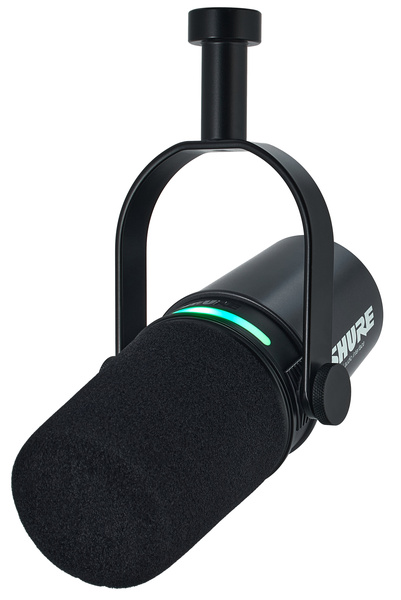
The Shure MV7i is an XLR microphone, which means it needs an interface, mixer or XLR-equipped recorder to reach a computer — it will not plug directly into a USB port. That is a deliberate trade rather than a missing feature: XLR signal is analogue and lower-noise over the cable run, and it hands gain control to dedicated preamp hardware instead of a laptop's built-in sound card.
On the Shure MV7i specifically, Shure states: Enables high-quality 2-channel audio recordings without the need for an external interface; Offers gain of +60 dB and 48 V phantom power; Connection of a second dynamic or condenser microphone via XLR possible. At £389.99 it sits in the premium tier of this catalogue, and those specific figures (not just the XLR connection type) are what should decide whether it fits your setup over another Shure model or a different brand at a similar price.
In practice this suits anyone already running, or planning to run, an audio interface: a two-person podcast, a home studio with more than one microphone, or a setup where consistent gain and phantom power matter more than plug-and-play simplicity.
The trade-off is an extra piece of hardware in the signal chain. If that is not yet in your setup, budget for a basic USB audio interface alongside this microphone rather than expecting it to work straight into a computer.
Once an interface is in place, an XLR microphone like the Shure MV7i is usually the more capable long-term choice, since the interface's preamp quality — not a USB chipset — ends up doing most of the work in how the recording actually sounds.