
The complete guide
Why USB is the easiest way into podcasting, and where it starts to show limits
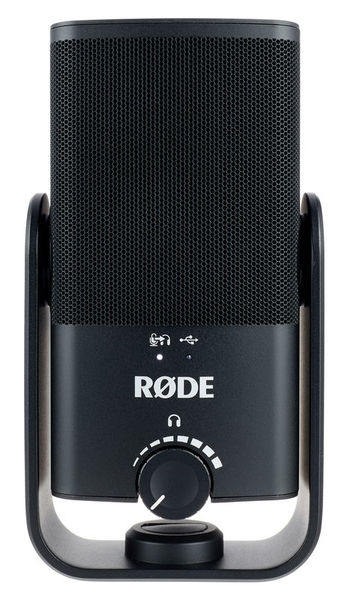
The Rode NT-USB Mini connects straight to a computer over USB, with no audio interface, mixer or separate power supply required. Plug it in, select it as the input device, and it is ready to record — which is exactly why USB microphones dominate the entry-level podcasting and streaming market.
On the Rode NT-USB Mini specifically, Rode states: Polar pattern: Cardioid; Integrated pop protection; Max. sound pressure level: 121 dBA (@ 1% THD). At £104.99 it sits in the mid-range tier of this catalogue, and those specific figures (not just the USB connection type) are what should decide whether it fits your setup over another Rode model or a different brand at a similar price.
That simplicity is the whole appeal: a single cable, no phantom power to think about, and driver-free operation on most modern operating systems. For a solo show, a voiceover, or someone recording their first few episodes, that removes almost every technical barrier between deciding to record and actually doing it.
The limits show up mainly with multiple microphones at once. Most USB mics use their own onboard analogue-to-digital converter, so running two or three of them together for a group recording usually means separate USB inputs rather than one clean mixed signal — an XLR setup through a shared interface handles that scenario more gracefully.
For anyone recording solo, or hosting one guest at a time on a separate call, the Rode NT-USB Mini sidesteps that limitation entirely and stays the simpler option.